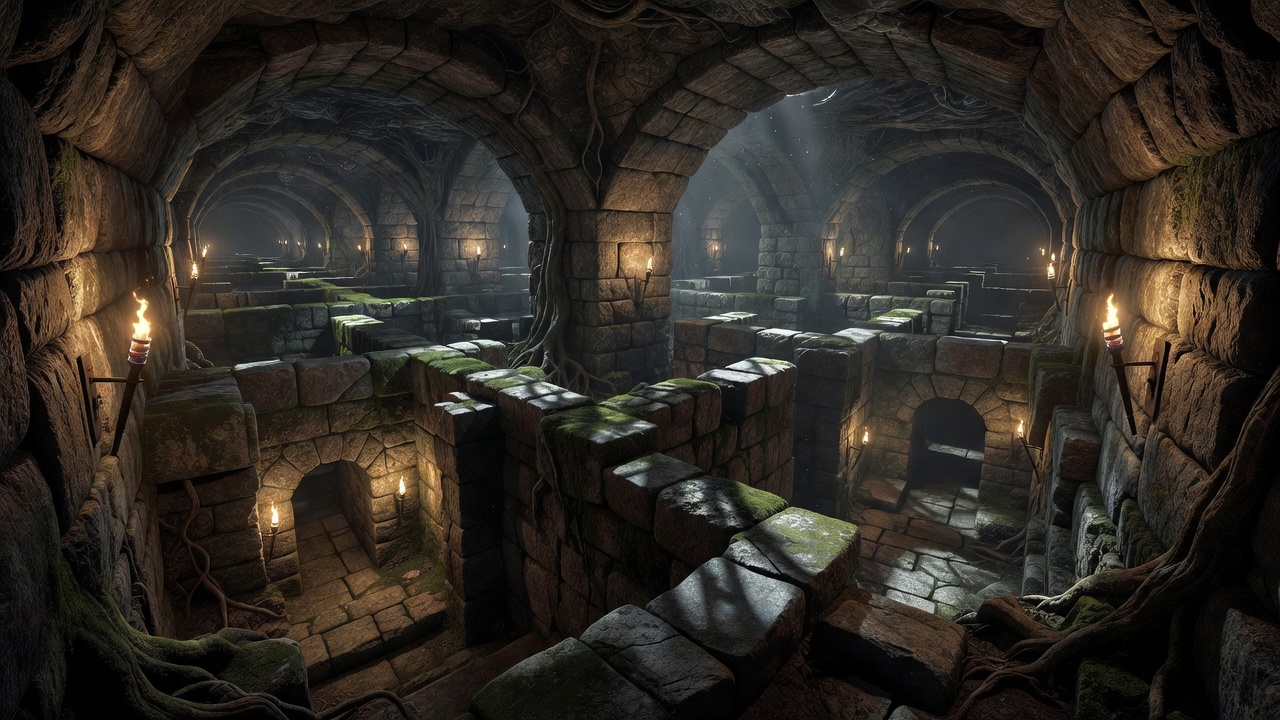
Far below the bustling boulevards of Paris lies an intricate, multi-layered underground labyrinth spanning over 300 kilometers (186 miles). While the public Catacombs represent only a tiny fraction of this subterranean web, the restricted Grand Réseau Sud (Great South Network) conceals Roman aqueduct remains, medieval stone quarries, and secret resistance bunkers from World War II.
Lutetian Limestone Excavations
Starting in the Roman era, builders carved out massive blocks of warm, yellow limestone (known as Lutetian limestone) to construct Notre-Dame Cathedral and the Louvre. As the city expanded over the centuries, it unknowingly grew directly over these hollowed-out subterranean caverns.
In 1777, King Louis XVI established the Inspection Générale des Carrières (IGC) after catastrophic ground collapses swallowed houses on Rue Saint-Jacques. IGC engineers spent decades mapping, reinforcing, and building masonry walls underground, transforming chaotic stone pits into structured tunnels with street names carved directly into the subterranean stone pillars.