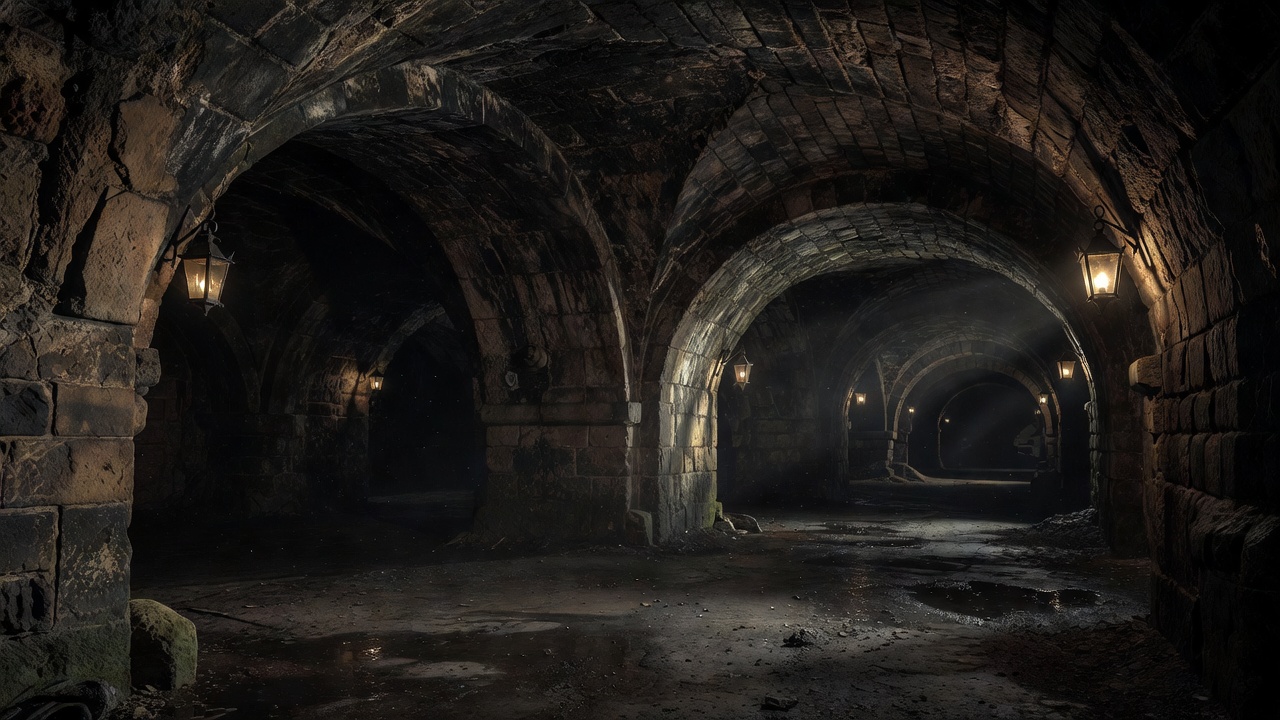
Constructed between 1785 and 1788, the South Bridge in Edinburgh was built to span the Cowgate gorge, connecting the High Street to the University of Edinburgh. Enclosed within nineteen massive stone arches were 120 underground chambers known today as the South Bridge Vaults.
From Trade Hub to Slum Subterranea
Initially used by local tradesmen—including shoemakers, cutlers, and distillers—as dry storage rooms and workshops, the vaults were soon abandoned due to poor waterproofing. Water seeped through the sandstone arches, creating damp, dark, unventilated spaces.
By the early 1800s, as the industrial revolution crowded Edinburgh, the city's poorest residents, refugees, and illegal operators moved into the dark chambers. The vaults turned into a hidden subterranean slum, complete with illicit whiskey stills and illegal gambling dens.
Sealed Away for a Century
Due to rampant crime and squalor, the city council ordered the vaults filled in with rubble and sealed with stone masonry around 1835. They lay undisturbed and forgotten for over 150 years until Scottish rugby player Norrie Rowan discovered a tunnel leading into the vaults in 1985.
Today, the South Bridge Vaults remain one of the most remarkable preserved examples of 18th-century subterranean urban architecture in Western Europe.